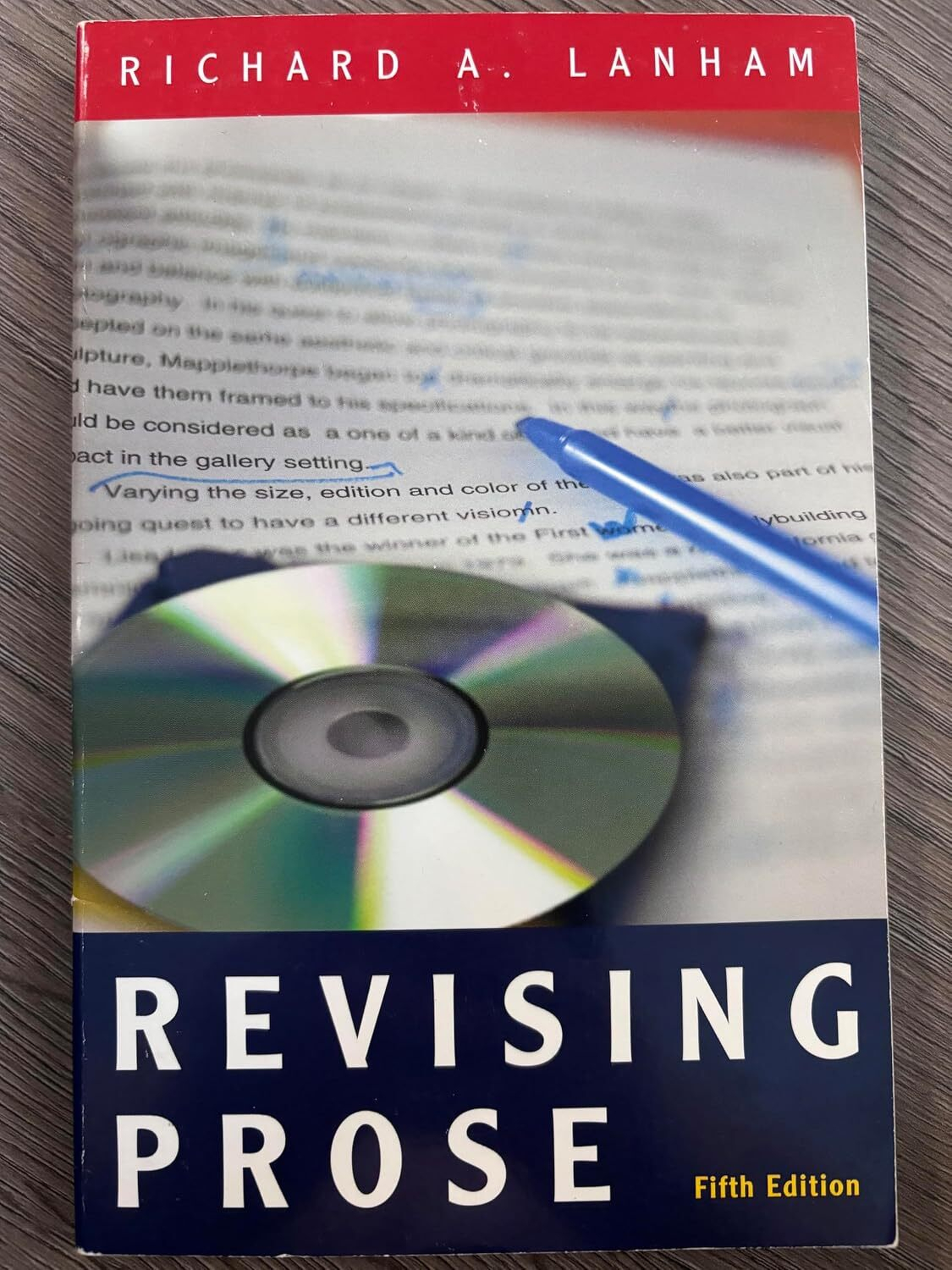
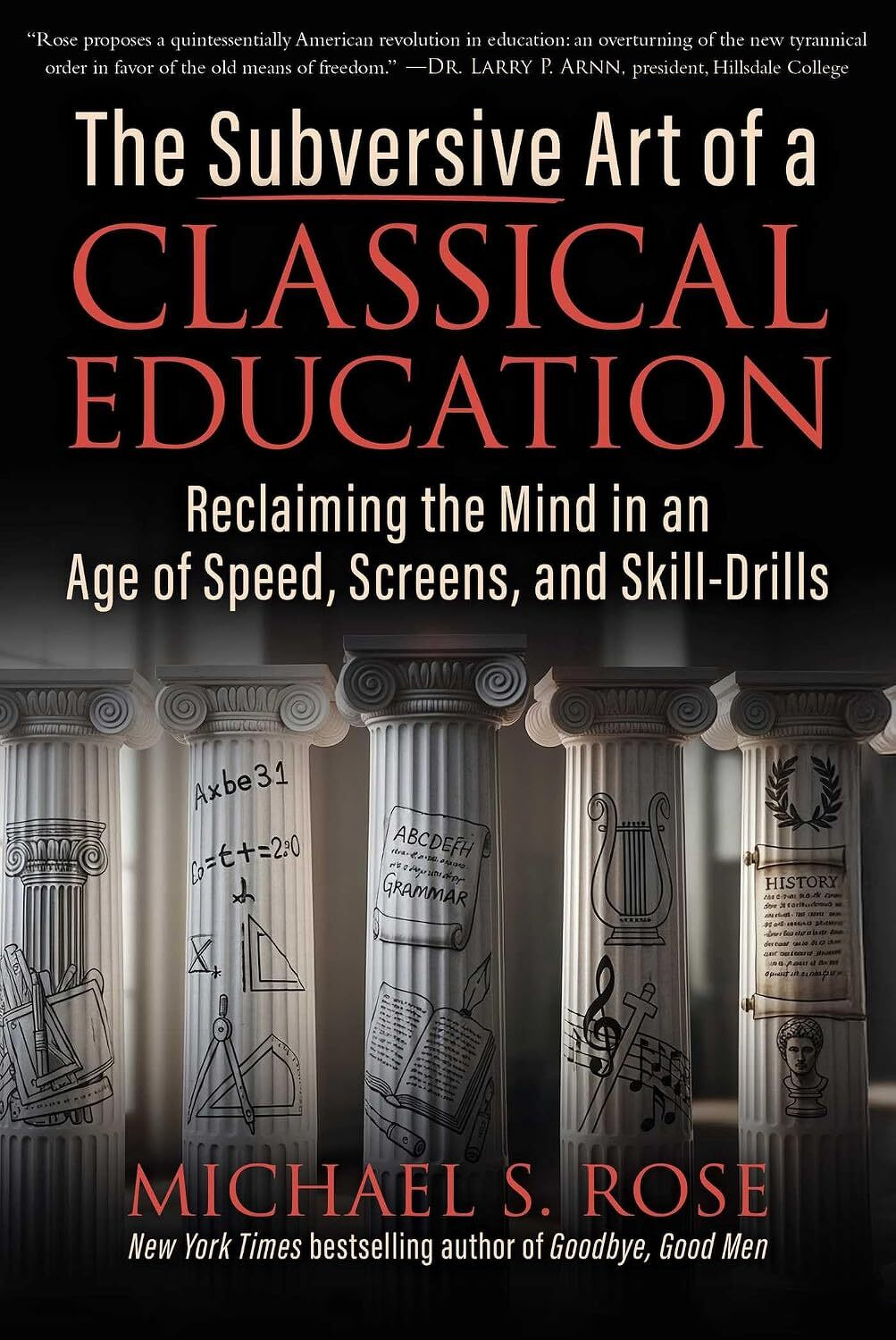
I’ve begun reading The Subversive Art of a Classical Education by Michael S. Rose and Revising Prose by Richard A. Langham, and as a result, after only two chapters in each book, my patience with today’s online writing environments, and much of the writing found within them, has taken a major dive. I’m enthralled with Rose’s description of the value of learning how to diagram sentences – a skill I was never taught when I was growing up in the 60s – and his impassioned defense of a classical approach to education as an act of resistance to the superficial nature of 21st-century life and thinking. I also found myself longing for my Great Books collection that I gave to my niece when we moved. Langham’s ability to clarify poor writing through careful eliminating of verbiage and prepositional phrases, which dovetailed with Rose’s sentence diagramming, made me long for an age when writing took time and was carefully edited.
I must confess my own participation in this culture of speed writing: I wrote thousands and thousands of words on my blog, Theatre Ideas (theatreideas.blogspot.com – yes, blogspot), from 2005-2012. Many times, I would write several posts a day, hundreds and hundreds of words, in a white heat of passion and creativity. And when I look back today, I must admit that the writing isn’t bad, but it is reactive writing of a moment in time. Yesterday, I read a self-published book by a cultural critic with a reputation, who published a short collection of four blog posts he’d written several months ago about which he was particularly proud. The book was slightly, both in pages and in ideas. In fact, it had one useful idea, one with which I was in full agreement, which was not so much developed as it was repeated. It needed an authorial revision followed by an editorial red pencil.
I find myself wondering what venues today value slow, thoughtful writing. I hear that careful editing has begun to disappear, even at major publishers like OUP. Back in 2009, I bought a paperback copy of bell hooks’s Belonging: A Culture of Place, published by Routledge, who ought to know better, that had multiple egregious typos on nearly every page. I have no idea whether an unedited version had accidently been printed, but I was never able to get through the book before putting it back on the shelf with a sigh So this is not something new, but for me, after 20 years of it, I find that I’ve had enough. Rose and Lanham tapped into a longing within me for something that requires me to slow down and appreciate ideas that are both profound and powerfully written, by which I do not mean obscure and convoluted – Lanham calls this “The Official Style,” which he skewers relentlessly – but both clear and resonant. Emerson has it; Byung-Chul Han doesn’t (although maybe he does in German). Malcolm Gladwell has developed blgospeak into an art form, or maybe it’s the result of having written for The New Yorker for so long. I just bought a book of Susan Sontag’s essays. I find her a bit of an intellectual charlatan, but I bow to her writing style.
There’s a place for a casual style, of course, and social media and Substack are a few of those places, but the relentless need to crank out regular content leads to birdbath writing in which readers splash around in an idea without really getting all that wet.
I suspect, like so much in my life, this is about getting older. As time gets shorter, I value it more, and I have less inclination to give any of it to movies, TV shows, novels, Substack essays, or anything (or anybody) else that doesn’t provide ROTI (Return on Time Invested). I don’t have time to throw away on a Substack pundit’s kneejerk “takes” about the issue du jour. As Shakespeare wrote in Richard II, “I wasted time, and now doth time waste me; / For now hath time made me his numb’ring clock.” I’m no longer willing to kill time; I want to deepen my understanding of the world, deepen my self-knowledge through reflection, and perhaps provide some wisdom before making my exit.
It’s a lot; there are days when I think it is too much. There are days when I think simply paying attention is enough, and on those days I am probably just as right as I am on the days when I drive to the UMass Amherts Du Bois Library to pick up another stack of books. But there are fewer and fewer days that I am willing to simply be entertained. At root, I’ve always been a Horatian: art exists to entertain and instruct. If art is only educational, Horace writes, the audience grows bored and tunes out; if art is only entertaining, it serves no higher purpose and fails to improve society. Or at least it fails to improve me, and that’s my focus.
And unpopular opinion in this culture of artistic lap dances and roller coasters, but one, I suspect, with which at least Michael S. Rose would agree.