On Edmund Wilson's Style and Career Path

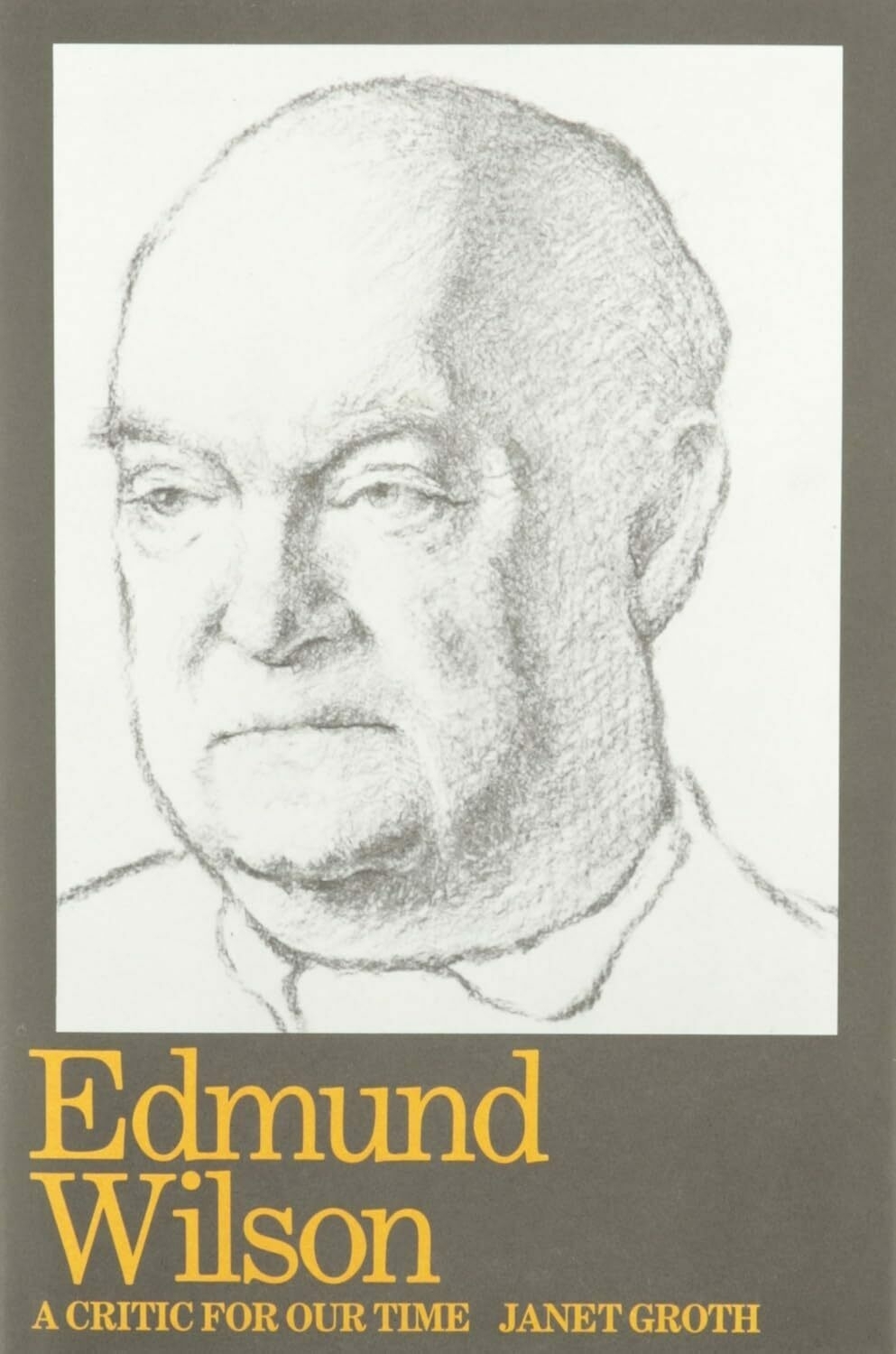
line drawing of Edmund Wilson's head

I’ve been reading Janet Groth’s excellent book Edmund Wilson: Critic for Our Time and have encountered her description of Wilson’s prose style that accounts for both why I enjoy reading Wilson and what I aspire to in my own writing (still a long way to go on that front). I’m going to piece together sentences from several of Groth’s pages in Chapter Two for the purpose of condensation. His prose style:

  • exhibits a lesser degree of formality than academic writing. "I can't write the jargon of critical quarterlies," Wilson says;
  • is "well written, intensely felt, pungent, terse";
  • has "color and rhythm";
  • should be "highly personal";
  • should bear the eighteenth-century qualities of "lucidity, force, and ease";
  • uses Voltaire as a model and is "intended to provide a nondidactice, neutral medium that will allow the free play of the intellect over the subject at hand".
In his essay "Thoughts on Being Bibliographed," Wilson described his general approach to his writing career. > "To write what you are interested in writing and to succeed in getting editors to pay for it, is a feat that may require pretty close calculation and a good deal of ingenuity....My own strategy ... has usually been, first to get books for review or reporting assignments to cover on subjects in which I happen to be interested; then, later, to use the scattered artices for writing general studies of these subjects; then, finally, to bring out a book in which groups of these essays are combined. There are usually to be distinguided ... at least two or three stages; and it is of course by the books that I want to stand, since the preliminary sketches quite often show my subjects in a different light and in some cases, perhaps, are contradicted by my final conclusions about them."

Brilliant. I wish I'd had that paragraph much earlier in my writing life--I would have save the drafts of some of the articles I published on websites that no longer exist. Still -- perhaps it's not too late to start.

Jaron Lanier's "Oy, AI" -- Don't Try to Hide the People

More Jaron Lanier: “Oy, AI.” It is a good supplement, or dare I say replacement, for his interview on Sean Illing’s podcast “The Gray Area” (which I linked to in a previous post) mainly because someone like Lanier seems to be boxed in by the assumptions baked into the interviewer’s questions, no matter how well-meaning the interviewer is. “Have you not listened to anything I’ve said at all?” Lanier almost shouts at Illing at one point, and I sympathize with his frustration. He keeps getting dragged down by the gravitational pull of the dominant narrative, whereas in his writing he can build a vision without interruption.

In this essay, he refuses to follow those who idolize generative AI (he even rejects that moniker--he calls it "mashup AI," which is, frankly, a lot more accurate) as well as those who fear it, seeing both orientations as based humanity's religious impulse to create biblical golden calves and then fear and worship them as if they didn't build them themselves. Marx might have called this reificiation. His solution is to make Mashup AI more like the Talmud.

"For those who don’t know," Lanier explains, "the Talmud is an ancient document in which successive generations have added comments in a unique layout on the page that identifies who is commenting. The Talmud is based on a beginning that is perceived as divine, but the elaboration is perceived as human. That’s a great way to spur arguments about interpretation—meaning a great way to be Jewish." As such, Lanier explains, the "Talmud was perhaps the first accumulator of human communication into an explicitly compound artifact, the prototype for structures like the Wikipedia, much of social media, and AI systems like ChatGPT." But, he notes, there is a huge difference: "The Talmud doesn’t hide people. You can see differing human perspectives within the compound object." He contrasts this with Wikipedia, which Lanier points to as an example of "a singular oracle in which contributors are generally hidden, even though there was no practical reason to demand this." His suggestion is to make mashup AI more like the Talmud: stop hiding the people from which it draws its mashups.

"There is no reason to hide which artists were the primary sources when a program synthesizes new art. Indeed, why can’t people become proud, recognized, and wealthy by becoming ever-better providers of examples to make AI programs work better? Why can’t our society still be made of humans?" In other words, why can't mashup AI combine the tradition of citation with a new position in which people create input for the "training" of LLMs--i.e., which not make it a job for which people are paid.

To be honest, I think the latter idea is probably not that far away, as the mashup AIs have largely synthesized what already exists, and they will need new stuff to avoid plateauing. So artists and thinkers and what Robert Reich once called "knowledge workers" may still have some economic worth, who knows?

Regardless, Lanier provides a rational response to the insanity of the current AI bruhaha, and I find him refreshing.

Jaron Lanier on AI

This morning, I listened to Sean Illing interview Jaron Lanier, a tech insider known for his work with Virtual Reality, and also a humanist thinker about things tech. This interview is about AI, and Lanier’s thoughtful humanism was refreshing. His dismissal of the Turing Test as being a distraction that leads to the waste of energy and resources seemed spot on, and his encouragement that we stop thinking about AI as a separate entity was a breath of fresh air, as was his assertion that AI is just another technology that needs continual improvement. I tend to find Illing a bit of an Eeyore when it comes to life in general, but Lanier keeps the conversation sharp

BREAKING: Only 12% of the 1903 general public believed that the flight at Kitty Hawk would affect their lives, and 75% thought it would affect them negatively.

So here’s the problem: American-made cars aren’t made with American-made parts. So prices on those cars will also go up.

What a maroon.

For some reason, I decided to post something about AI on Threads.

2 stars. Would not recommend.

The Size of Grants to Individual Artists

“One study (Leveraging Investments in Creativity 2003) found that 79 percent of all grants to individual artists were under $10,000, 66 percent were under $5,000, and sadly, 50 percent of all grants to artists in this country were under $2,000.”

Because Art John R. Killacky

But by all means let’s stay locked into the non-profit model for the arts. It’s really working!

On AI in Music Composition and Image Generation

Back on March 4, Derek Thompson interviewed composer Mark Henry Phillips on his podcast “Plain English” about how AI might change the music industry. It was an interesting interview (to me) because Phillips himself discussed how impressed he was with the music it created from written prompts, how he had used it to complete some of his own unfinished compositions he’d abandoned when he got stuck, and a variety of other examples. Phillips was fascinated and, of course, worried that it would put him out of a job, while also noting that, by learning to use AI himself he could increase his productivity and be inspired to consider directions he might not have otherwise. What really intrigued me was an experiment he and Thompson ran.

Apparently, Thompson is an amateur pianist and composer himself. He found himself in a recording studio recently, and he decided to take advantage of a keyboard that was in the room to record, using his iPhone, a short composition he'd sketched that was inspired by the style of the Russian composer Dmitri Shostakovich. He then sent the recording to Phillips and asked him to "extend" the composition beyond the bare bones he'd played. Phillips did so, building out and elaborating on Thompson's musical sketch, and the results were pretty nice. Phillips said he could have done a lot more if the initial recording had been done on something more hi-fidelity than an iPhone. Thompson sent the product to his wife, who really liked it.

Yesterday, I received a Substack post by Ethan Mollick, whose book,[ _Co-Intelligence: Living and Working with AI](https://a.co/d/eIGKhOv)_, helped me to understand AI better, while allaying some of my fears. The post is called "[No Elephants: Breakthroughs in Image Generation](https://www.oneusefulthing.org/p/no-elephants-breakthroughs-in-image?r=3358ve&utm_campaign=post&utm_medium=web)." Mollick is not an AI promoter, nor a naysayer. He is an academic trying to understand what AI can and can't do, and every time there is a new release in AI world he takes it for a test run. This post showed the recent advances in AI image creation.

Mollick not only shows us the images, but also describes in detail the words he used to generate the images. So it's not just product, but process as well. Several things occurred to me as a result of these two explorations.

First, that **the new Most Important Person in the Room is going to be people who have a command of descriptive language and knowledge of past art styles and artists.** In other words, art and music history majors, or more broadly, the humanities. I'm looking forward to seeing universities who have zeroed out the arts scrambling to reconstruct new departments focused on AI, but which will _require_ all the traditional courses. We'll still need programmers and engineers for more high-level work, of course, as well as artists who can make original rather than derivative work.

Second, that **creativity will become more democratized**. Did you hear the joy in Derek Tompson's voice when PhilIips played for him his enhanced composition? More people will be able to have the experience of _making something themselves_. Instead of creativity being confined to a small number of designated professionals, people will be empowered to express themselves more gracefully. I can imagine parents and grandparents, aunts and uncles, who previously had to buy whatever birthday cards and party favors were available at Target, being able to generate things specific to their kids' likes and interests. People who never could draw or play an instrument will, through the power of words, be able to express themselves. Kids will develop an interest in art and music (and film, when that technology matures) that they wouldn't have had if they'd needed to buy a piano or a raft of art supplies. People will more easily be able to create an image for a blog post, or for their web page. In other posts, Mollick asks the AI to create an interactive game for him to teach certain skills that he teaches in his business classes. Teachers will be able to create presentations and teaching games tailored to the kids in their own classroom. This is like the transition from having to know HTML to create a website to being able to do so through drag-and-drop elements in Wordpress. It's similar to using Adobe Photoshop without the steep learning curve, or at least, a _different_ learning curve. Will this reduce jobs for commercial artists or composers? Maybe at first, but at some point professionals, who are skilled in working with AI, will be in demand because they have joined an understanding of AI with their own knowledge and creativity to make fabulous things that someone else would never have imagined.

Is AI going to be disruptive? Definitely, in the same way that self-driving cars will be disruptive, that drones will be disruptive, that robots continue to be disruptive. How many of you use tax software to file income taxes? Are there fewer employees at H & R Block now? What happened to all the typesetters who were necessary to publish a book before desktop publishing took over? Some of them didn't make the transition, but there are still typesetters using their skills to lay out beautiful books and magazines -- in fact, the manuscript of the third edition of my textbook, _Introduction to Play Analysis_, is in the hands of one right now, and their work makes my amateurish attempts in _Building a Sustainable Theater_ look kind of lame. But there is no way I could have found a publisher to publish a book with such a small audience, nor could I have afforded to have a freelancer lay it out for me. But it is now out in the world, and selling in the mid-single digits even as we speak.

I totally understand the anxiety that writers, artists, composers, and filmmakers have about AI. I remember many people having similar feelings on campus when MOOCs started to be created by well-known professors at prestigious universities. People worried that administrators would use MOOCs and online courses in general to provide courses at much lower cost than employing an actual, live professor who may or may not have been as "good" as the star prof from MIT. And yet, it didn't happen. In fact, conventional wisdom is that online education may have severely damaged the learning skills of the COVID students. Sure, I can now go on Udemy and take a class in HTML or day trading or some topic that interests me, and I can go on YouTube to learn how to build a picket fence or replace a faucet or fix a bike, and that's awesome, but is it a replacement for all education? Well, if you've ever ghosted an online course as I have, you know the answer.

My main point is that there is another side to AI than what is being promoted by people online, and we ought to at least imagine those benefits before going into wholesale condemnation mode.

[I'm not going to address the whole issue about LLMs being "trained" on "stolen" material -- that's a topic for another day.]

It's Just My Opinion and Other Time Wasters

Someone once said that I write in declarative sentences, and that’s true. I really dislike all the bobbing and weaving of “this is just my opinion” and “maybe I’m wrong, but” and all the other ways people try to avoid offense. Of course it’s “my opinion,” I wrote the damn thing–who else’s opinion would it be? Of course I might be wrong–is anybody infallible? It’s such a waste of time. Get in, say the thing as directly as possible, and get out. The amount of time I’ve spent in a lifetime trying (mostly unsuccessfully) to assuage the feelings of others was just a waste.

“Speak what you think to-day in words as hard as cannon balls, and to-morrow speak what tomorrow thinks in hard words again, though it contradict every thing you said to-day.” ― Ralph Waldo Emerson

The Barter Theater and the Importance of Alternative Stories

“Recently, I read this essay by Robert Porterfield, an aspiring actor who founded a theatre company in Abingdon, Virginia. The company called Barter Theatre is apparently the nation’s longest-running professional theater, except I’ve never heard about this theater until now.

This was written by a 20-something theater person. It’s not their fault that they haven’t heard of it–nobody mentioned the Barter Theatre to me, either, when I was their age. In fact, it wasn’t until I had a doctorate and was well into my career before I discovered it independently thanks to Todd London’s anthology An Ideal Theater: Founding Visions for a New American Art, an amazing anthology filled with such stories. It could be a starting point for learning about other European, African, and South American theaters that are operated on an entirely different basis than theaters in the US.

The Barter Theatre was formed in a small town (Abingdon, pop 3005) in Virginia in the depth of the Great Depression, and it got its name from how people bought tickets. The people who lived in the area were mostly farmers, and they had a lot of food and nobody to sell it to because prices had dropped so low. So they’d bring eggs, or a chicken, or a pig, or jam, or cheese to the box office and trade it for tickets to the show. The produce and animals were then shared among the people who did the plays – theater artists who, in New York where the number of Broadway productions had gone over a cliff, would otherwise have been standing in the breadline waiting for handouts. Instead, they were doing plays and eating well in a community that otherwise lacked entertainment options. The founder, Robert Porterfield, said “There were two kinds of hungering…hungering in the body and hungering in the soul. I wanted to bring together the actor who was hungry in the stomach and the people I knew best, the people of the Virginia highlands, because I had a hunch that they were hungry for ther spiritual nourishment the theater could bring them. I thought they were hungry enough for it to pay in the vegetables and chickens and jam they couldn’t sell.”

People told him that it wouldn’t work, it couldn’t be done; he did it, and it worked. And while eventually (and perhaps sadly) they later shifted to a cash basis, the theater still exists and is thriving.

Students, in my opinion, need to hear this story and stories like it (there are many, many more just as innovative), but most theater programs don’t include them anywhere in their curriculum, which is a damn shame. A semester-long course could be devoted solely to London’s anthology – I know, because I’ve done it many times myself. While American Theater Magazine publishes an article by a theater professor who says that students need to learn more about the new demands of getting a job in the traditional New York theater (websites, video clips, etc.), I believe that they should be receiving information about how other theater artists have created vibrant and innovative artistic lives outside of that dehumanizing environment.

I don’t know. Maybe I need to do such a course on-line.